Procedure for participating in the «Horizon Europe» programme
1. Search for a call for proposals
The European Commission and its funding bodies publish calls for proposals on the «Funding and Tenders» portal .
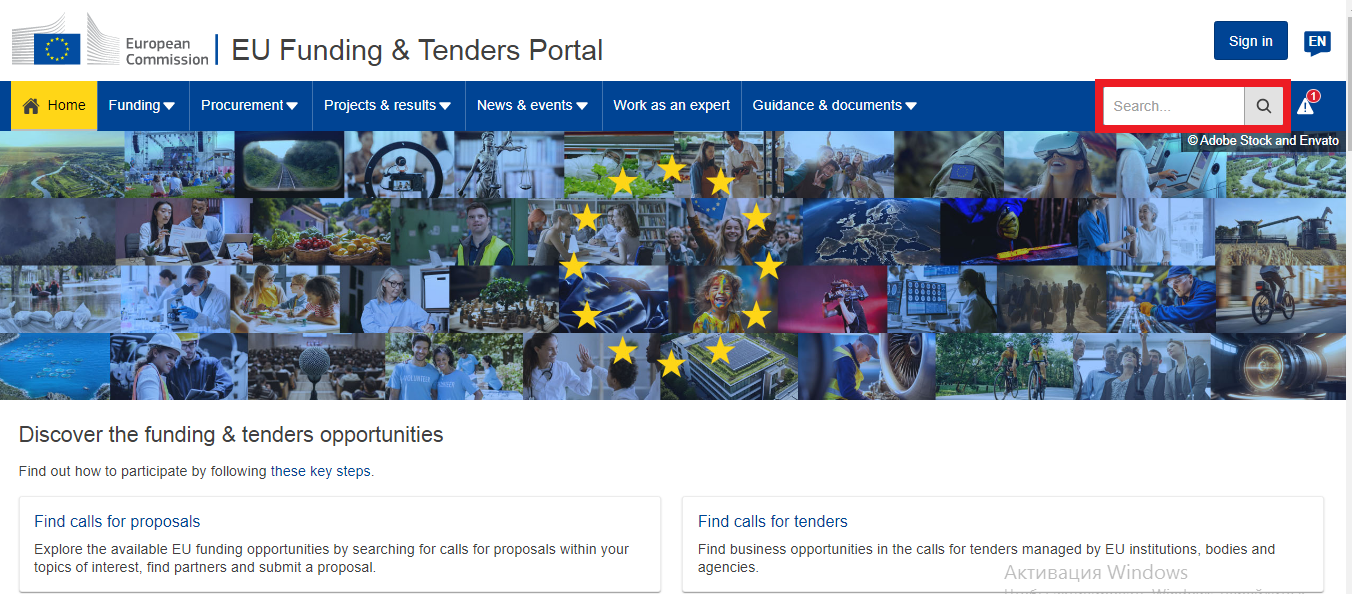
1. Search from the homepage using keywords that best describe your areas of interest. You can refine the results using additional filters.
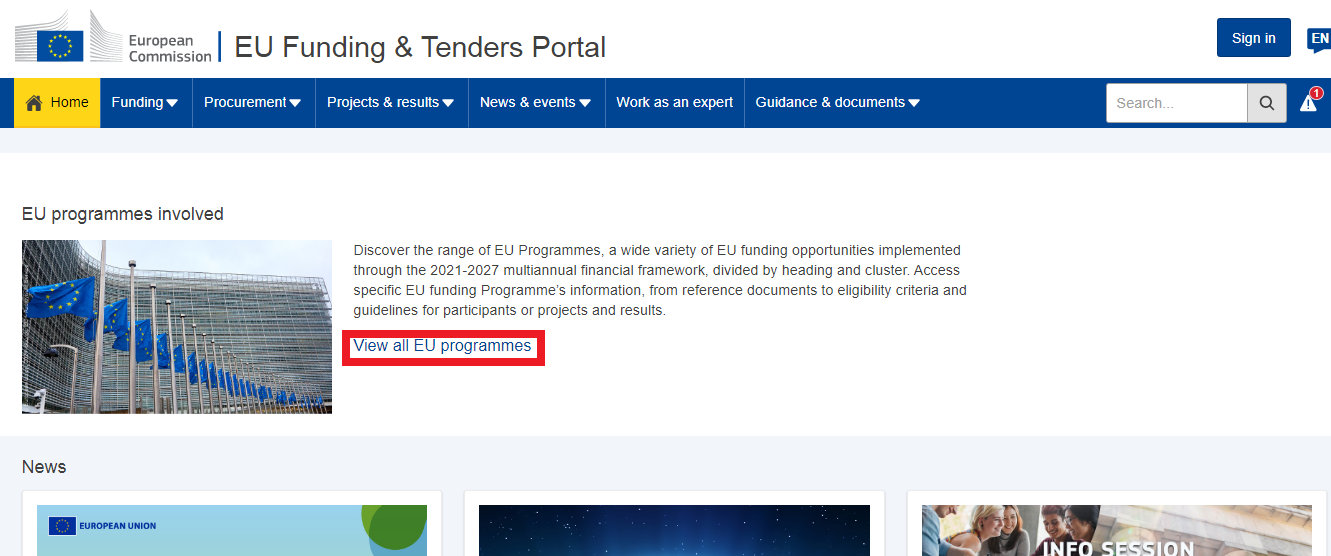
2. Search among the EU programmes listed on the homepage. You can use the quick links to go to the calls for project proposals for a specific programme.
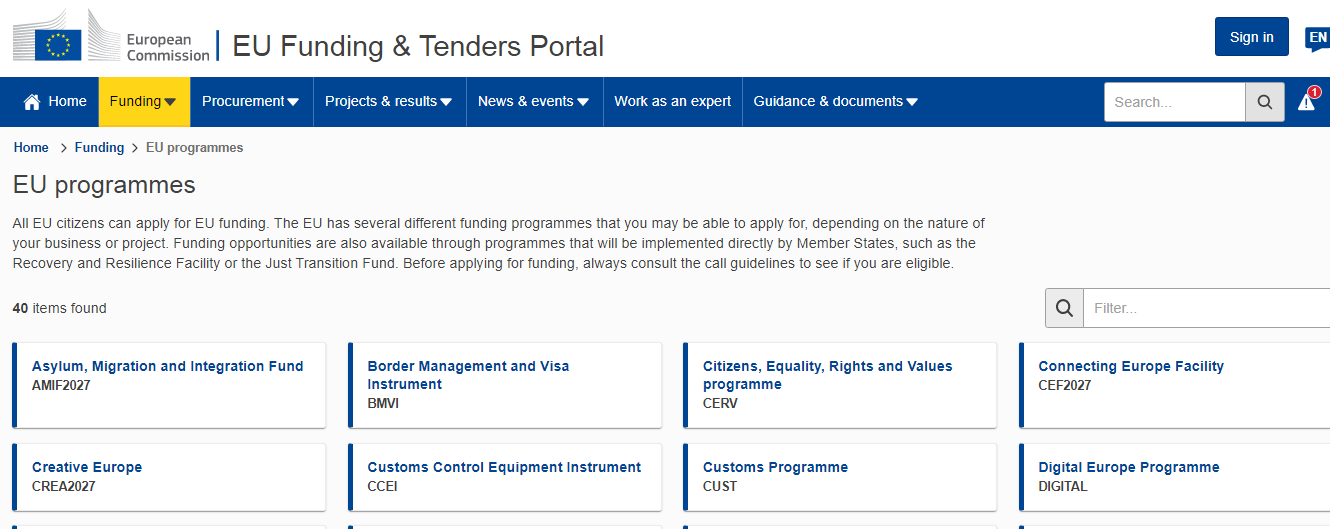
3. The calls for proposals are organised by theme and implemented through various types of activities. Select a theme to find out more about the opportunity you have found: documents relating to the theme, guidelines and other instructions are available on the theme page.
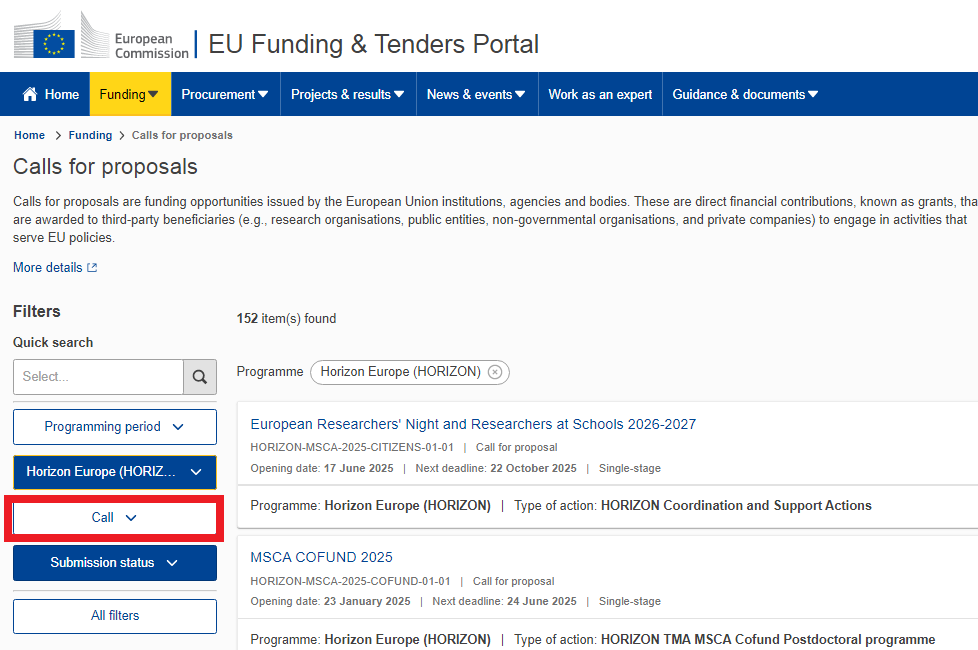
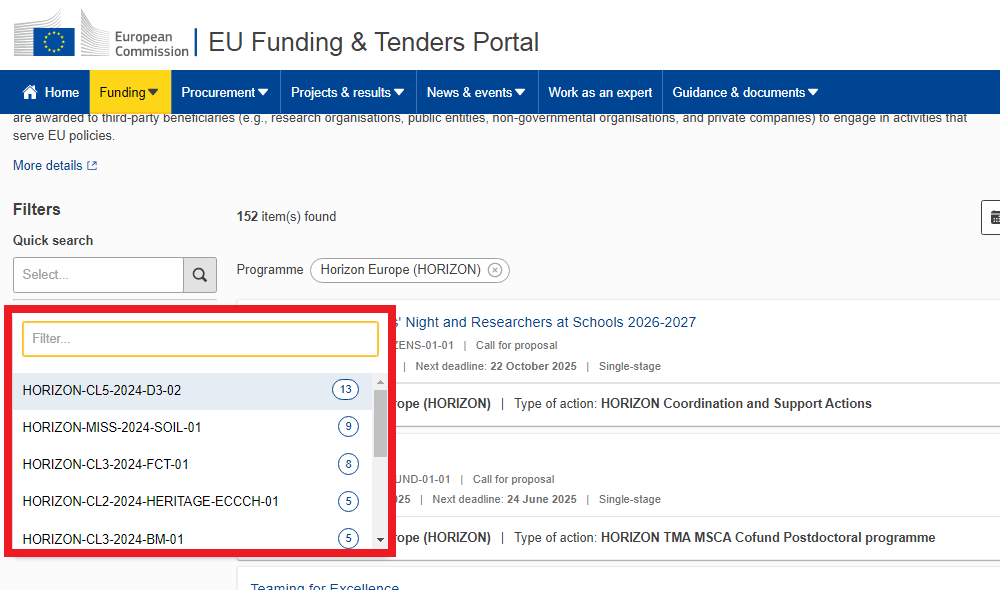
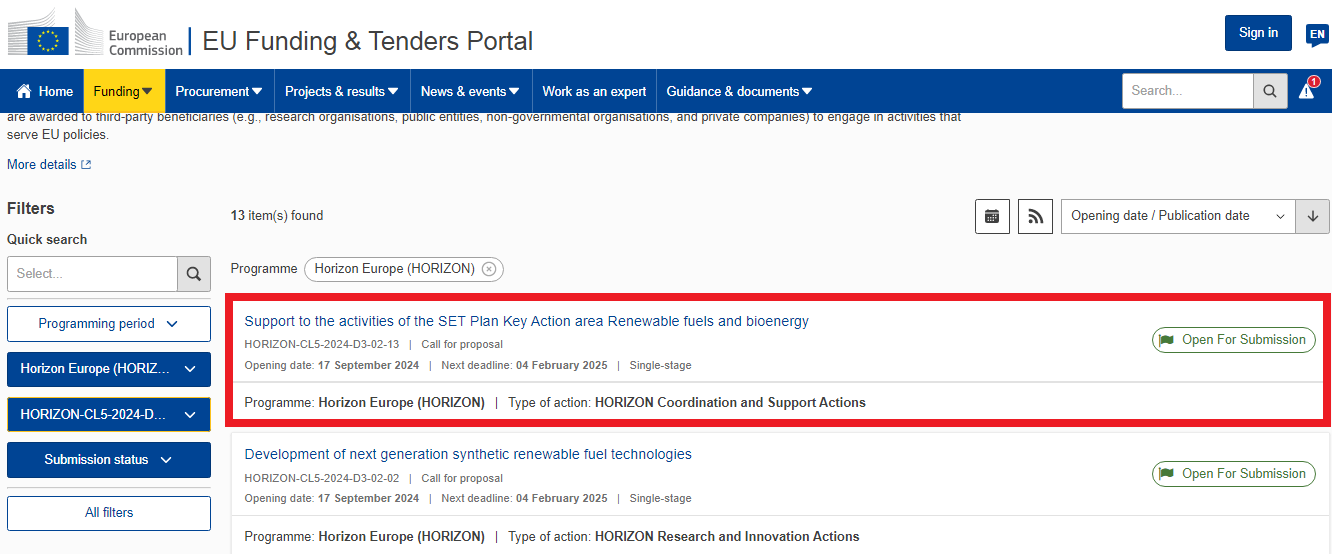
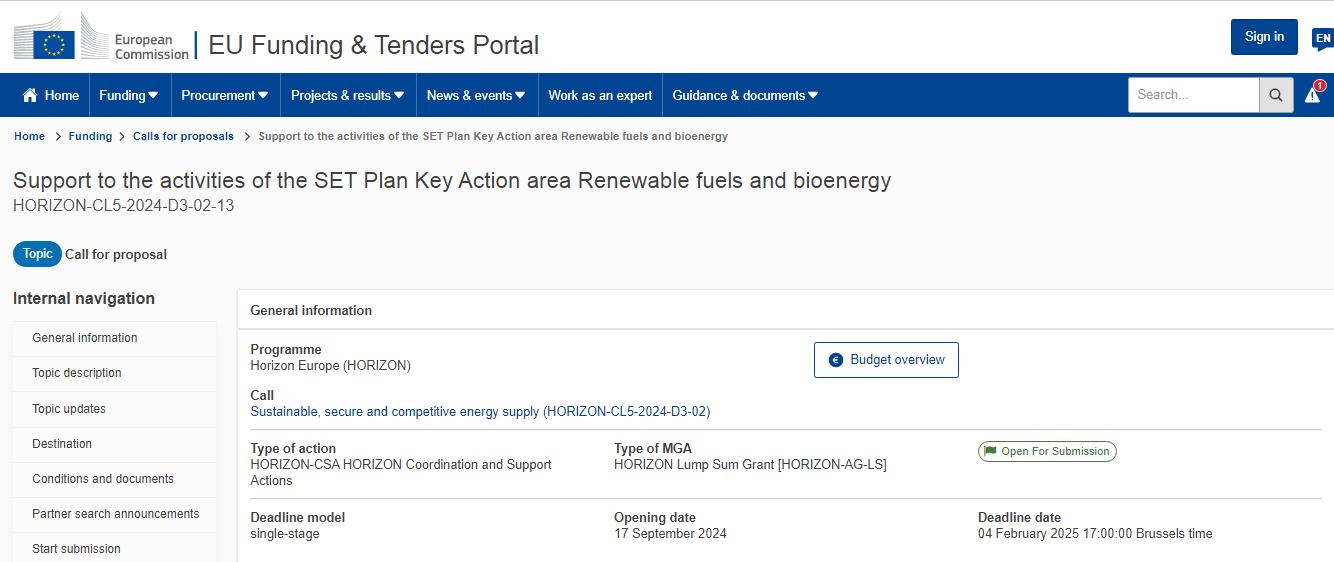
4. Search for calls for project proposals and tenders from European institutions.
2. Search for partners
Most EU grant competitions are aimed at consortia with several beneficiaries, comprising participants from different countries — with the aim of enhancing EU added value, promoting cooperation between organisations from different countries, improving the quality of applications, and ensuring fair competition and equal opportunities across the EU.
Tools and resources for finding partners:
1. The easiest way to find partners is via the ‘Find Partners’ section on the ‘Funding and Tenders’ portal. There, you can find organisations seeking partners, organised by topic.
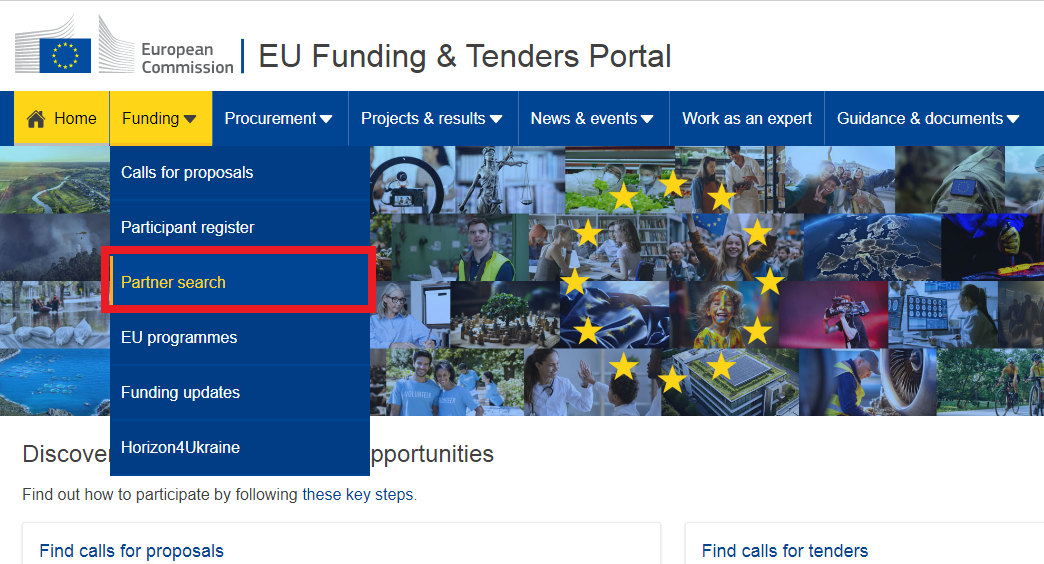
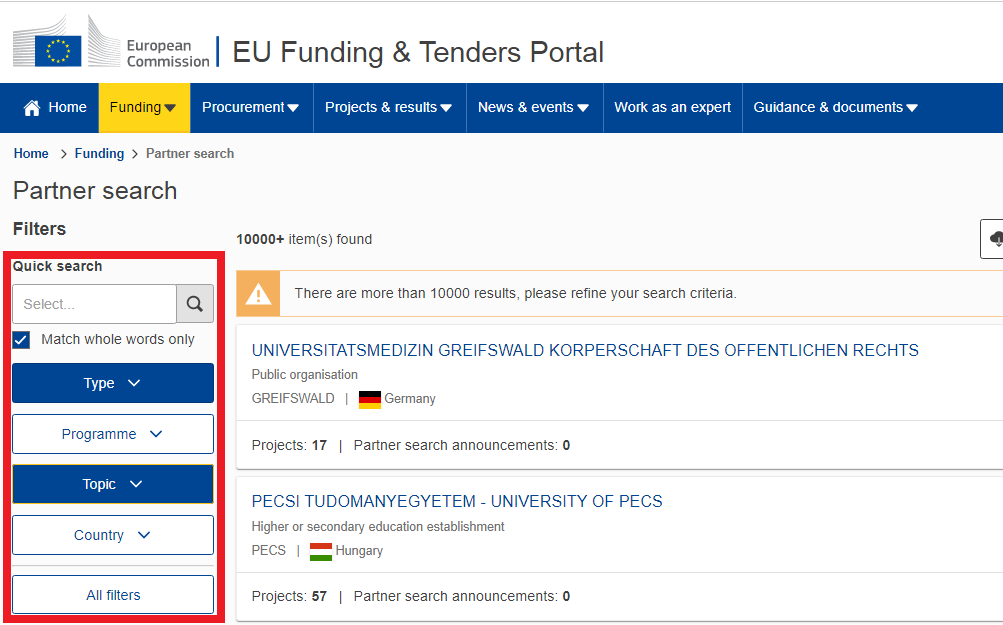
Platforms such as the following also offer similar features: EU Calls, Ideal-Ist, EEN.
2. Portal CORDIS is a useful resource for finding partners. It allows you to view successful projects, their results and partners.
3. Brokerage events provide an opportunity not only to get to know one another, but also to present one’s ideas to a wide audience of partners with an interest in a specific field.
4. COST projects bring together researchers from different countries with the aim of forming partnerships to submit larger projects under the Horizon Europe programme. There is an opportunity to join ongoing projects.
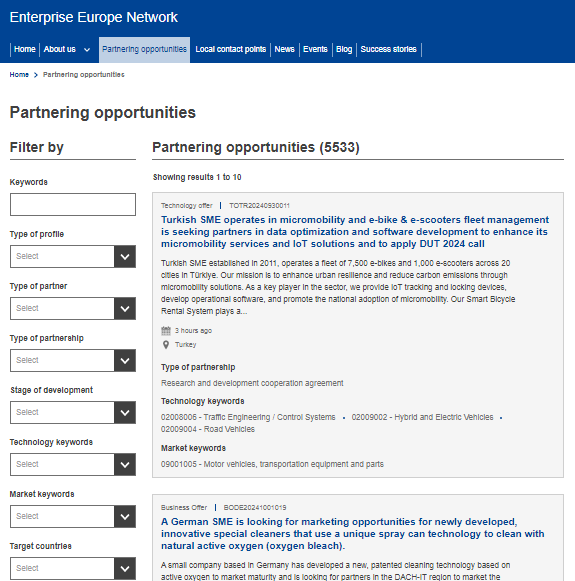
5. The Enterprise Europe Network (EEN) is aimed at small and medium-sized enterprises. The website features innovation and technology profiles of international companies and research organisations to help users find partners for business, innovation and technological cooperation.
6. Traditional methods — conferences, scientific publications and data sharing — also remain effective.
This list is by no means exhaustive; there are many other ways to find partners, but it all depends on your ability to present your ideas. Keep an eye out for our event announcements, where we’ll be working on our soft skills together!Цей перелік не є вичерпним, існує ще багато інших можливостей пошуку партнерів, але все залежить від Вашого вміння презентувати свої ідеї. Слідкуйте за нашими анонсами заходів, на яких ми разом прокачуємо soft skills!
3. Creating an account on the ‘Funding and Tenders’ Portal
The European Commission maintains an online register of beneficiaries and partner organisations participating in EU programmes in the fields of research, innovation, education, culture and the audiovisual sector.
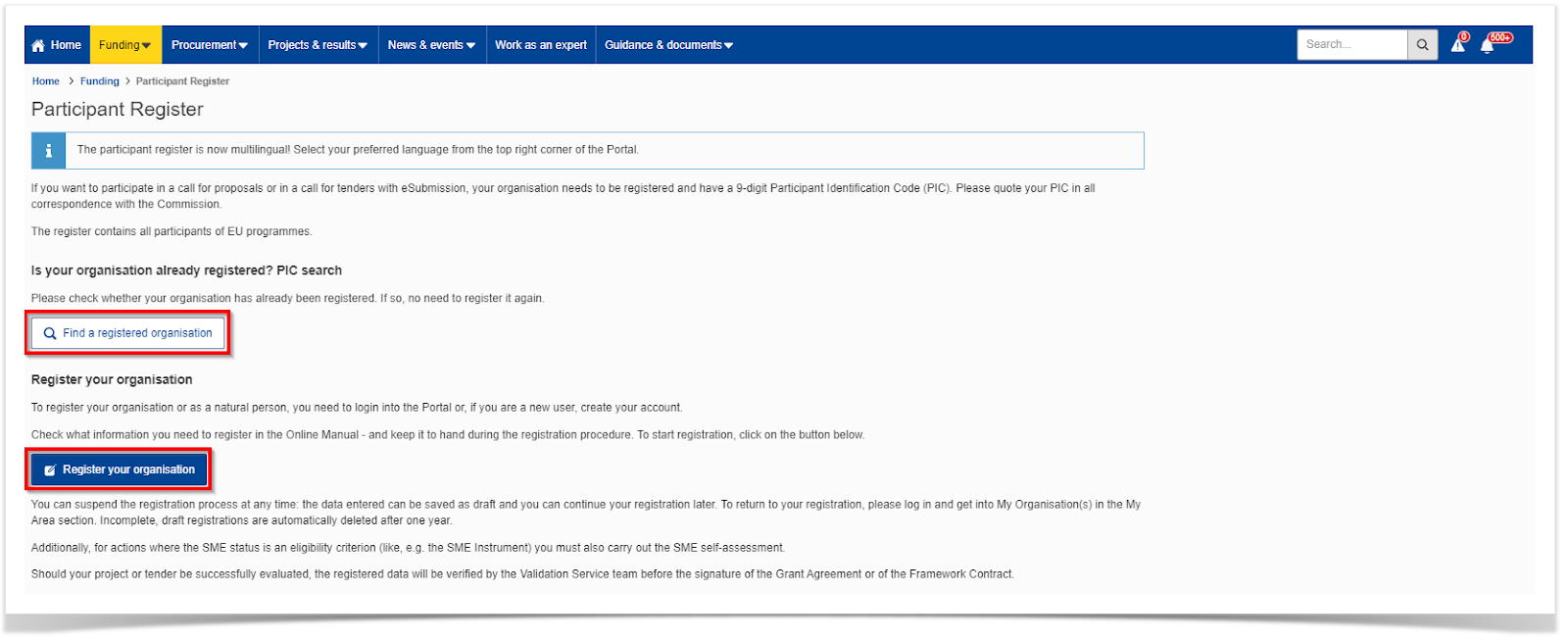
Participants in the ‘Horizon Europe’ programme must register via the link below and obtain a unique 9-digit Participant Identification Code (PIC), which is issued to a legal entity once and remains valid for all its subsidiaries for the duration of the programme.
Registration takes place on the ‘Funding and Tenders’ portal under the Funding → Participant register section. The system first checks whether a PIC code is available; if the organisation is not in the database, the registration process is initiated by clicking the ‘Register organisation’ button.
4. Submission of a project proposal
The project proposal must include:
- detailed information about all the consortium partners
- a description of the objectives
- expected short- and long-term outcomes
- proposed practical solutions in the relevant sector.
It is important to set aside sufficient time to prepare a high-quality and comprehensive proposal.
Project proposals must be drawn up in accordance with the European Commission’s requirements. All the rules and sections that a project proposal must contain are set out in the section accessible via the link.
Different types of projects have their own specific formats.
Proposals must be submitted by the deadline for the relevant call for proposals. Each call for proposals has its own link for submitting a project proposal.
5. Expert assessment
Once the submission deadline has passed, each application is assessed by a panel of independent experts in the relevant fields of the competition. They assess the applications based on specific criteria, which can be found via the link.
6. Signing of the Grant Agreement and the Consortium Agreement
If the project proposal is successful and has been awarded funding, a Grant Agreement is signed between the European Commission and the coordinating organisation. Consortium members sign an Accession Form, which requires a valid LEAR user who either signs all documents themselves using an electronic signature or may delegate this role to another person.
At the same time, a Consortium Agreement is drawn up, setting out the rights and obligations of the members. Once the Grant Agreement has been signed, the coordinator receives an advance payment, which they then distribute amongst the partners.