- General Information
- Staff
- Structure of the Faculty of Mechanical Engineering
- Specialties and educational programs
- History of the Faculty of Mechanical Engineering
- Useful links
Faculty of Mechanical Engineering

Mechanical engineering is a key industry that ensures the development of the economy and technology!
We train specialists for enterprises in the machine-building, metallurgical and aviation industries.
The mission of the Faculty of Mechanical Engineering is to train highly qualified specialists capable of solving complex technical tasks in the field of machine-building and metalworking. Our graduates have deep knowledge in the field of design, construction, production and operation of machines and mechanisms, they possess advanced technologies and are able to create the latest solutions for industry.
The year of establishment of the faculty is 1930.
Contacts:
address of the dean's office: str. Zhukovsky 64, Zaporizhzhia, Ukraine, 69063
auditorium (office): 378 (dean of the faculty), 380 (methodists of the faculty)
mobile number: +38 (063) 040 02 30
official Telegram channel of the faculty: https://t.me/mf_nuzp
tel.: +38 (061) 769 85 50 (dean), +38 (061) 769 83 50 (methodists)
e-mail: dekanat_mbf@zp.edu.ua
Faculty Staff
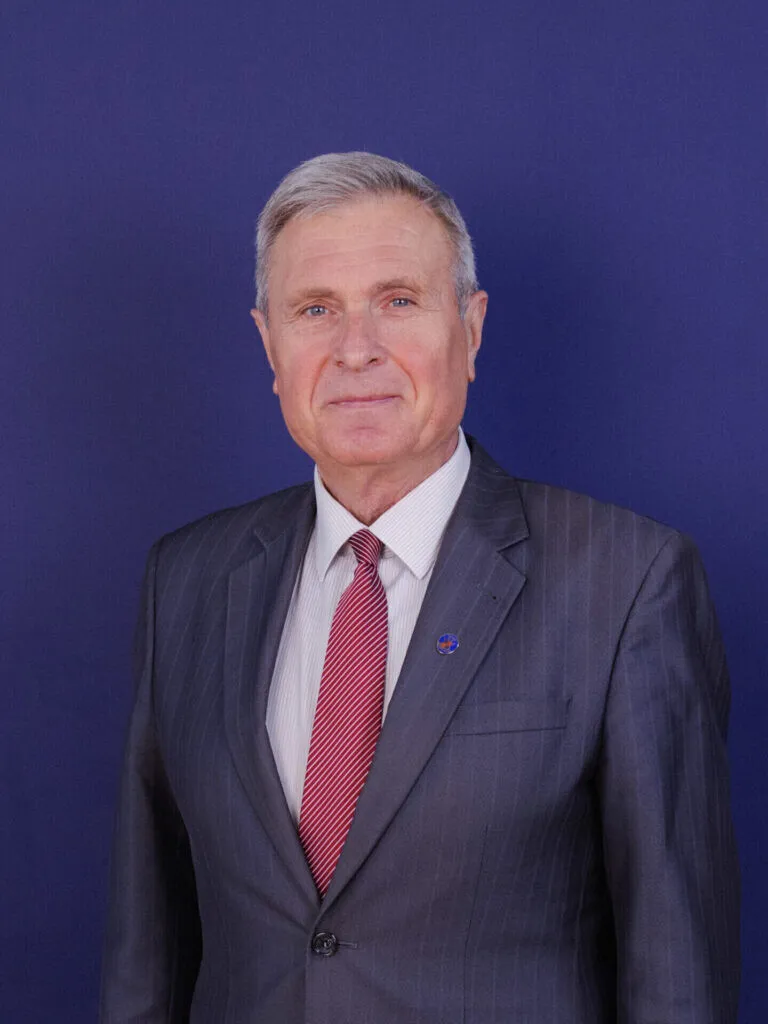
Vasyl Ivanovych Hlushko
Dean of the Faculty of Mechanical Engineering
Address:
69063, Україна, м.Запоріжжя, вул.Жуковського,
Phone:
e-mail:
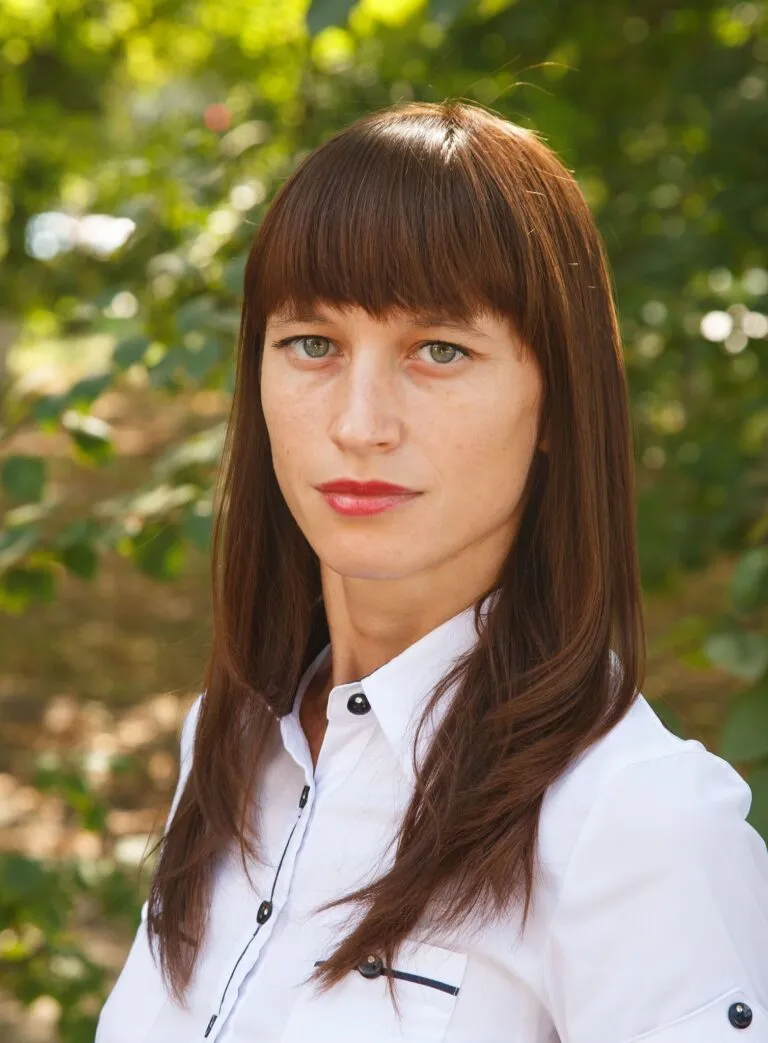
Antonenko Nina Mykolaivna
Deputy Dean of the Mechanical Engineering Faculty, Associate Professor of the «Mathematics» Department
Address:
69063, Ukraine, Zaporizhzhia, st. 64 University Street
Classroom:
354
Phone:
Structure of the Faculty of Mechanical Engineering
Department «Mechanical Engineering Technology»
The department prepares bachelors, masters and doctors of philosophy under the educational program «Technology of mechanical engineering» specialty G9 Applied mechanics. The department was founded in 1932.
Department «Metal cutting machines and tools»
The department prepares bachelors, masters and doctors of philosophy under the educational program «Metal cutting machines and systems» specialty G11 Mechanical engineering (by specialization). The department was founded in 1930.
Department «Details of machines and lifting and transport mechanisms»
The department trains bachelors, masters and doctors of philosophy under the educational program «Lifting and transport, road, construction, land reclamation machines and equipment» specialty G11 Mechanical engineering (by specialization) The department was founded in 1932.
Department of «Aviation Engine Technologies»
The department trains bachelors, masters and doctors of philosophy under the educational programs of the mechanical engineering field «Aviation engines and power plants» and «Technology of production of aircraft engines and power plants» specialty G12 Aviation and rocket and space engineering. The department was founded in 1932.
Department «Pressure processing of metals»
The department trains bachelors, masters and doctors of philosophy under the educational program «Equipment and technologies of plastic forming of mechanical engineering structures» specialty G9 Applied mechanics. The department was founded in 1930.
Department «Mathematics»
The department provides teaching of academic disciplines: higher mathematics, linear algebra and analytical geometry, mathematical analysis, probability theory and mathematical statistics, mathematical foundations of system analysis, discrete mathematics, computer discrete mathematics, economic-mathematical methods and models in economics, economic-mathematical models in economics, econometrics, for all specialties of the university. The department was founded in 1930.
Specialties and educational programs
| Specialty | Educational program | Educational levels | Forms of education |
| G9 Applied mechanics | Engineering technologies | Bachelor Master's degree | Full-time, dual, part-time |
| G9 Applied mechanics | Engineering technologies | Doctor of philosophy | Day, evening |
| G9 Applied mechanics | Equipment and technologies of plastic forming of mechanical engineering structures | Bachelor Master's degree | Full-time, dual, part-time |
| G9 Applied mechanics | Equipment and technologies of plastic forming of mechanical engineering structures | Doctor of philosophy | Day, evening |
| G11 Mechanical engineering (by specialization) | G11.01 Machine tools and tools/Metal cutting machines and systems | Bachelor Master's degree | Full-time, dual, part-time |
| G11 Mechanical engineering | Metal cutting machines and systems | Doctor of philosophy | Day, evening |
| G11 Mechanical engineering (by specialization) | G11.05 Vehicles/Lifting and transport, road, construction, reclamation machines and equipment | Bachelor Master's degree | Full-time, dual, part-time |
| G11 Mechanical engineering | Lifting and transport, road, construction, reclamation machines and equipment | Doctor of philosophy | Day, evening |
| G12 Aviation and rocket and space technology | Aircraft engines and power plants | Bachelor Master's degree | Full-time, dual, part-time |
| G12 Aviation and rocket and space technology | Aircraft engines and power plants | Doctor of philosophy | Day, evening |
| G12 Aviation and rocket and space technology | Production technologies of aircraft engines and power plants | Bachelor Master's degree | Full-time, dual, part-time |
| G12 Aviation and rocket and space technology | Production technologies of aircraft engines and power plants | Doctor of philosophy | Day, evening |
History of the Faculty of Mechanical Engineering
The Faculty of Mechanical Engineering is one of the largest in the university in terms of the number of departments, laboratories, classrooms, and students. There are only five graduate departments: «Technology of aircraft engines», «Technology of mechanical engineering», «Metal cutting machines and tools», «Details of machines and lifting and transport mechanisms», «Pressure processing of metals», as well as one general education department – the department of «Mathematics». Every year, the faculty graduates more than 130 specialists and masters in six specialties. Its graduates successfully work at machine-building and metallurgical enterprises in Zaporizhzhia and other cities of Ukraine.
The dean’s office must organize, manage and control all this. It can be compared with the headquarters, which organizes the management of troops. Dean’s offices at the university appeared at the beginning of the 30s of the 20th century. During the transition from the technical school to the institute, new structural changes took place in the management of the institute. In 1934, the departments were replaced by two faculties: general technical and special. At the latter, students of 3-4 years studied, departments of agricultural machinery, cold metal processing, forging and stamping, and foundry were active. A few years later, this faculty was called Mechanical and Technological (dean M.O. Govorov). At the same time, the Faculty of Agricultural Mechanical Engineering began to operate – the predecessor of the Faculty of Mechanical Engineering.
The face of the deanery is its dean. This person should be a strategist, an organizer, be respected by both teachers and students. Back in the days of the Faculty of Agricultural Engineering, its dean was Hryhoriy Oleksandrovych Yakovenko (1950-1955), a graduate of the institute. He had considerable experience in administrative work (worked in the personnel department of the institute), was the head of the departments of mechanical engineering technology and agricultural machinery. It is this experience of G.O. Yakovenka contributed to the formation and organization of the dean’s work.
In 1955, a fairly young man – Serhii Petrovych Zhitnytskyi – became the dean of the same faculty. His life path was closely connected with the institute. In June 1945, after finishing the second year of the Dnipropetrovsk Mining Institute, he was accepted to the third year of the Zaporizhia Automechanic Institute in group 613 TM. Serhii Petrovych studied only with «excellence», graduated from the institute, postgraduate studies and for many years worked as a teacher, associate professor, proving himself as a talented scientist, from 1979 to 1989 he headed the «DM and PTM» department.
All these valuable qualities of S.P. Zhytnytskyi successfully used it when he headed the dean’s office of the faculty. He should be considered the first dean of the Faculty of Mechanical Engineering, which he headed for 10 years.
In 1967, Mykola Andriyovych Levchenko became the dean of the faculty. He is also a pupil of ZISM, who graduated in 1940. He worked as an engineer and in managerial positions at enterprises of the former Soviet Union. In 1965, Mykola Andriyovych, who held the position of director of the Iskra factory, decided to return to his native institute for teaching work. Good knowledge of production, high scientific level allowed M.A. Levchenko has been passing them on to future specialists for many years, especially the skills of managing a workforce.
Mykola Andriyovych worked part-time as a dean until 1977, remaining an associate professor of the «Mechanical Engineering Technologies» department, and was respected by teachers and students of the faculty. He cared not only about improving the conditions for the training of future specialists, but also about replacing himself. Also, his son – Borys Mykolayovych Levchenko, a highly qualified teacher, scientist, was respected among students not only for his knowledge, but also for his parental attitude towards them – worked at the «Metal Cutting Machines and Tools» department. So the parental seeds fell into good soil. The Levchenko dynasty continued to serve the university.
Evhen Hryhorovych Kovtun was a dean for only one year (1977 to 1978) – also a graduate of the Mechanical Engineering Institute and Faculty. Even in his student years, he showed himself to be an excellent student and in the course of scientific research. Together with his group mate E.H. Kovtun introduced a number of innovations in the production process at the plant named after Voikova
In 1978, Yevhen Hryhorovych went on a foreign business trip to Nicaragua. Then he returned and worked at his favorite department – «Metal cutting machines and tools» and passed on his rich experience to future specialists.
Yurii Semenovych Kulbaka, who headed the dean’s office of the faculty for 16 years (from 1978 to 1994), should be considered a «long-serving» dean. He is also a pupil of Mashinka. A diligent and intelligent student, a creative graduate student, a teacher, an associate professor and again «Metal cutting machines and tools». What was Yu.S. Saddle? There can only be one answer – he was the best representative of today’s managers, during his tenure at the dean’s office, the volume of work under economic contracts increased significantly, the quality of faculty members of the departments increased, and experience in training foreign students was accumulated. The material and technical base of the laboratories improved, and relations with the engineering and technical workers of a number of factories in Zaporizhzhia, Ukraine, and the Soviet Union improved. Yu.S. Kulbaka did everything for comprehensive development and raising the authority of the dean’s office not only at the faculty, but also at the university.
Yuri Semenovych was succeeded in 1994 by Vasyl Ivanovich Glushko, a graduate of the «machine» – automotive faculty. During his student years, he was an inquisitive student, an excellent student, a member of the student scientific society. After becoming a graduate student, V.I. Hlushko chose research in the field of unique composite materials as the topic of his dissertation research, which was later implemented in aircraft construction on space vehicles and other fields.
The dissertation was successfully defended and Vasyl Ivanovych works at the «DM and PTM» department, accumulates experience as a teacher, becomes an associate professor, and later, in 1998, he was elected a valid member of the Lifting and Transport Academy of Sciences of Ukraine for his significant scientific contribution. All this proves that the head of the dean’s office of the faculty is a comprehensively educated person with a stable and enduring character, who is a connoisseur of art and music, loves fiction, and he also loves students very much.