- General Information
- Staff
- Structure of the Faculty of Information Security and Electronic Communications
- Specialties and educational programs
- Information
- Useful links
Faculty of Information Security and Electronic Communications
Safe information. Reliable connection. Intelligent automation.
The mission of the faculty is the formation of highly qualified human resources for the digital transformation of society, strengthening of national security, development of critical infrastructures and innovative technologies in the field of telecommunications, cyber protection, electronics and automation.
The faculty contributes to the sustainable development of Ukraine through the training of specialists of the new generation, conducting applied research, developing partnerships with industry, international organizations and authorities, providing conditions for the personal and professional growth of each graduate.
The year of establishment of the faculty is 1968.
Regulations on the Faculty of Information Security and Electronic Communications
Contact:
address of the dean's office: st. 64 University Street, Zaporizhzhia, Ukraine, 69011
auditorium (office): 367
mobile number: +380630400239
official channel of the deanery: https://t.me/fret_nuzp
phone: +380(61)7698306, +380(61)7634258
e-mail: dekanat_fret@zp.edu.edu.ua
Faculty Staff

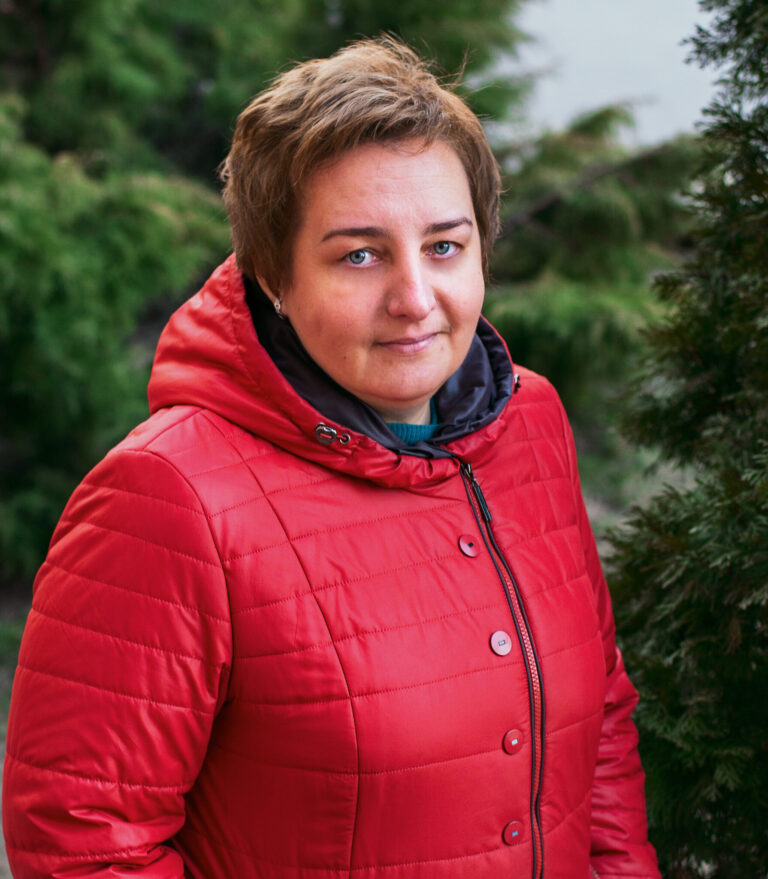
Furmanova Nataliia Ivanivna
декан факультету інформаційної безпеки та електронних комунікацій, доцент кафедри інформаційних технологій електронних засобів
Address:
69063, Україна, м.Запоріжжя, вул. Університетська, 64
Classroom:
369
Phone:
Kuliaba-Kharytonova Tetiana Ivanivna
deputy dean of the faculty of information security and electronic communications, senior lecturer of the department of information technologies of electronic means
Address:
69063, Ukraine, Zaporizhzhia, st. 64 University Street
Classroom:
367
Phone:
e-mail:
Structure of the Faculty of Information Security and Electronic Communications
Department of Information Security and Nanoelectronics
The department trains students in the following specialties: - F5 Cyber security and information protection (Bachelor's and Master's education levels); - G5 Electronics, electronic communications, instrumentation and radio engineering («bachelor's» and «master's» educational levels); - G6 Information and measurement technologies (educational level «bachelor»); - E6 Applied physics and nanomaterials (Ph.D. level). The year of the beginning of activity: 1966.
Department of information technologies of electronic means
The department trains students in the following specialties: - G5 Electronics, electronic communications, instrumentation and radio engineering (educational levels «bachelor», «master» and «doctor of philosophy»); - G7 Automation, computer-integrated technologies and robotics (Bachelor's and Master's degrees). The year of the beginning of activity: 1970.
Department of radio engineering and telecommunications
The department trains students in the specialty G5 Electronics, electronic communications, instrument engineering, and radio engineering (Bachelor's, Master's, and Doctor of Philosophy educational levels). The year of the beginning of activity: 1963.
Specialties and educational programs
| Specialty | Educational program | Educational levels | Form of education |
| F5 Cyber security and information protection | Cyber resilience of digital platforms and network infrastructure | Bachelor | Full-time, dual, part-time |
| F5 Cyber security and information protection | Technical protection of the infrastructure of information activity objects | Bachelor | Full-time, dual, part-time |
| G5 Electronics, electronic communications, instrumentation and radio engineering | Engineering and programming in radio electronics | Bachelor | Full-time, dual, part-time |
| G5 Electronics, electronic communications, instrumentation and radio engineering | Intelligent technologies of microsystem radio electronic equipment | Bachelor | Full-time, dual, part-time |
| G5 Electronics, electronic communications, instrumentation and radio engineering | Information communication networks | Bachelor | Full-time, dual, part-time |
| G5 Electronics, electronic communications, instrumentation and radio engineering | Micro- and nanoelectronic devices and devices | Bachelor | Full-time, dual, part-time |
| G5 Electronics, electronic communications, instrumentation and radio engineering | Radio-electronic devices and means | Bachelor | Full-time, dual, part-time |
| G6 Information and measurement technologies | Information systems of monitoring and control | Bachelor | Full-time, dual, part-time |
| G7 Automation, computer-integrated technologies and robotics | Automation, mechatronics and robotics | Master | Full-time, dual, part-time |
| F5 Cyber security and information protection | Technical protection of the infrastructure of information activity objects | Master | Full-time, dual, part-time |
| F5 Cyber security and information protection | Cyber resilience of digital platforms and network infrastructure | Master | Full-time, dual, part-time |
| G5 Electronics, electronic communications, instrumentation and radio engineering | Intelligent technologies of microsystem radio electronic equipment | Master | Full-time, dual, part-time |
| G5 Electronics, electronic communications, instrumentation and radio engineering | Information communication networks | Master | Full-time, dual, part-time |
| G5 Electronics, electronic communications, instrumentation and radio engineering | Micro- and nanoelectronic devices and devices | Master | Full-time, dual, part-time |
| G5 Electronics, electronic communications, instrumentation and radio engineering | Radio Engineering | Master | Full-time, dual, part-time |
| G7 Automation, computer-integrated technologies and robotics | Automation, mechatronics and robotics | Master | Full-time, dual, part-time |
| E6 Applied physics and nanomaterials | Applied physics and nanomaterials | Doctor of philosophy | Full-time, dual, part-time |
| G5 Electronics, electronic communications, instrumentation and radio engineering | Telecommunications and radio engineering | Doctor of philosophy | Full-time, dual, part-time |
The history of the Faculty of Information Security and Electronic Communications dates back to 1967, when the order of the USSR Ministry of Education approved the creation of the Faculty of Electronic Engineering within the then Zaporizhzhia Machine-Building Institute. The official countdown of the faculty’s activities has been going on since December 17, 1967.
In 1968, radio-electronic specialties were separated from the Electrical Engineering Faculty, on the basis of which a new faculty was formed. The first departments were: the Department of Radio Engineering, the Department of Microelectronics, and the Department of Design and Technology of Radio Equipment Production. The first dean of the faculty was elected Candidate of Technical Sciences, Associate Professor Voloshinov Volodymyr Pavlovich.
In the late 1980s, the faculty received a new name – the Faculty of Radio Instrumentation. This reflected the growing role of electronics and computer technology in industry and the need to train engineers for new industries. In the 1990s, the first specialties were opened in the field of software, computer systems and networks, and later – in the field of information protection.
At the turn of the 2000s, the faculty underwent structural changes. In 2001, two separate divisions were created – the Faculty of Radio Instrumentation (classical areas of electronics and radio engineering) and the Faculty of Informatics and Computer Engineering. The Institute of Radio Electronics and Informatics later functioned on their basis.
In 2012, the faculty was named the Faculty of Radio Electronics and Telecommunications, which reflected the dominance of telecommunications and microelectronic specialties in its structure.
In 1989-1994, the faculty was headed by Andriy Serhiyovych Konovalchuk, Ph.D., Associate Professor; in the period 1994 -1998 – Ph.D., Associate Professor Lizunov Serhii Ivanovych; 1998-1999 – Ph.D., Professor Pisa Dmytro Makarovych, in 2000-2022 – Ph.D., Associate Professor Kabak Vladislav Semenovych. Since 2022, the faculty has been headed by Ph.D., Associate Professor Furmanova Nataliia Ivanovna.
The modern history of the faculty began in 2023, when, in connection with the national priorities of digital transformation and security, it was renamed the Faculty of Information Security and Electronic Communications. This name emphasizes the strategic focus of the unit on training highly qualified personnel in the field of cyber defense, telecommunications, electronic systems and information technologies.
Scientific activities and international cooperation
The faculty is a center of active scientific work. Its teachers and students are engaged in developments in the field of information protection, signal recognition, radio-electronic systems, modeling of robotic complexes and intelligent control and automation systems. The unit maintains close ties with leading enterprises in the region, including: JSC «Motor-Sich», KP NVK «Iskra», ZMKB «Progress», Zaporizhzhia NPP, RPE «KHARTRON-UKOM», PrJSC «PLUTON»), LLC «Infocom LTD», as well as with modern IT companies.
A special place in the activities of the faculty is occupied by international cooperation. Teachers and students participate in Erasmus+ and DAAD programs, joint projects with European universities, and cooperate with research centers in the field of radio engineering, telecommunications, and information security.
Over its more than half-century history, the faculty has trained thousands of highly qualified specialists. Among them are heads of leading enterprises, scientists, designers, engineers, and statesmen. Graduates of the faculty work in large Ukrainian and international companies, in state authorities, and in the field of national security and defense.
The Faculty of Information Security and Electronic Communications continues the long-standing traditions of Zaporizhzhia Polytechnic, combining a classical engineering school with innovative educational practices. Its mission is to train competitive specialists capable of working in the conditions of modern challenges of the digital society, ensuring the development of telecommunications technologies and protecting the information space of Ukraine.