Synergy of the DESIRE and ENGITEC projects

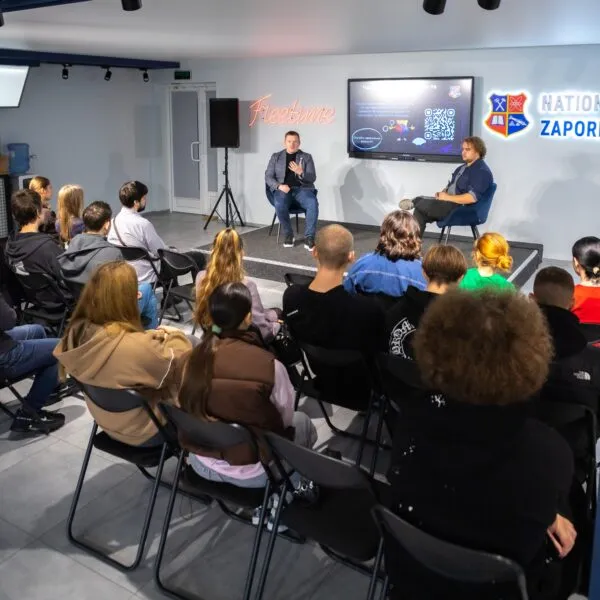
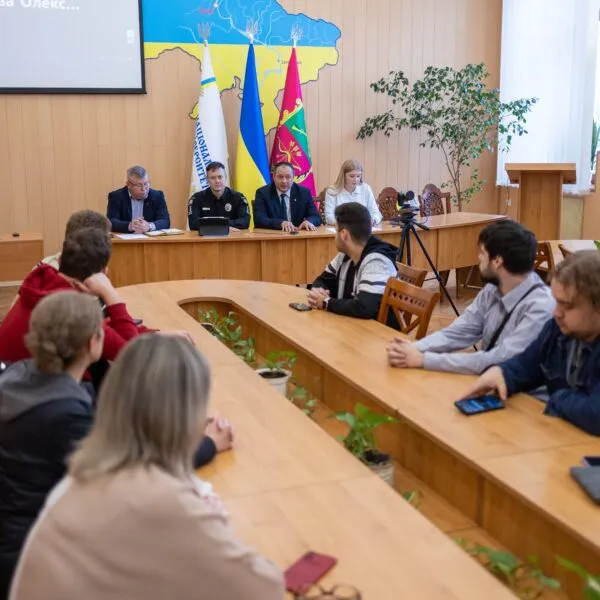
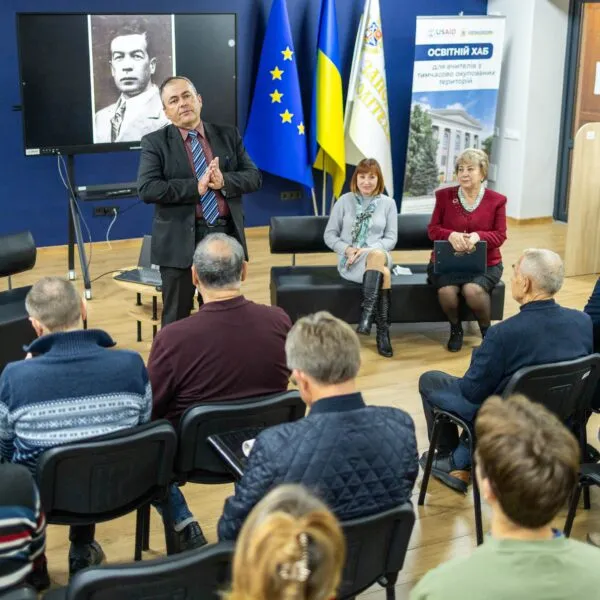
On December 1, 2014, an inter-TEMPUS coaching session was held, dedicated to finding effective ways to achieve the goals of the projects DESIRE «Development of courses in embedded systems using innovative virtual approaches for the integration of science, education and industry in Ukraine, Georgia, Armenia» and ENGITEC «Modernization of higher engineering education in Georgia, Ukraine and Uzbekistan in accordance with technological challenges».
Teachers of the Departments of Software and Metal-cutting Machine Tools and Tools discussed common tasks related to the implementation of modern European methodologies teaching and innovative pedagogical technologies in engineering education, as well as the problems of creating new laboratories at ZNTU «Embedded Systems and Remote Engineering», as well as «Interfaculty Laboratory of Technology and Product Design».
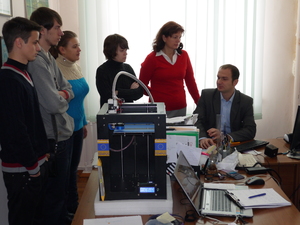
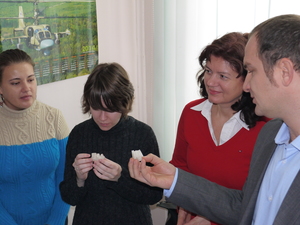
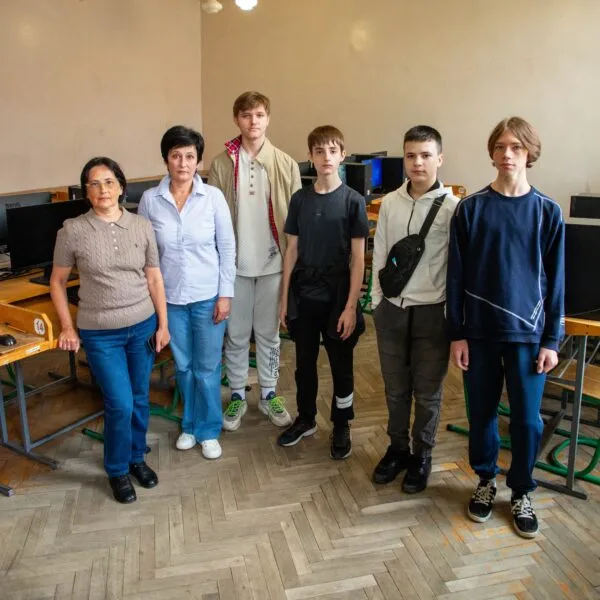
The event was attended by students of the Department of Software, studying in the specialties «Systems Software» and «Information Technologies of Design». Senior lecturers of the Department of MV&I V.Yu. Klymenko and P.V. Glushko demonstrated to students the capabilities of modern equipment used for automation of design and production – the MicroScribe G2X measuring arm, the Roland MDX-20 milling and engraving machine and 3D Printer from Ultimaker.
The technology of 3D printing, which today is capable of changing our lives, work and entertainment, has aroused particular interest. Leading global companies (for example, Airbus, General Electric, Boeing, Ford, Nike and others) widely use 3D printers for rapid prototyping, as well as the manufacture of real products. First of all, this is an opportunity to assess the ergonomics of the future product, its functionality and assembly capabilities, as well as significantly reduce the number of hidden errors before launching products into series.
Within the framework of the DESIRE project, it is planned to develop and implement the «CAD/CAM/CAE for Embedded Systems» module into the educational process, as well as purchase a 3D printer. Therefore, studying the practical experience and material and technical equipment of the Department of Software is a good start for teachers and students of the Department of Software.
The use of three-dimensional printing technology at ZNTU will contribute to increasing the visibility and efficiency of training for specialists in various areas of training and specialties, since the issues of automation of design and production based on modern high-tech solutions are relevant today for any industry.
Parkhomenko A.V., Associate Professor of the Department of Software