Internship of the student of the Department of Software V. Khokhlova in Germany

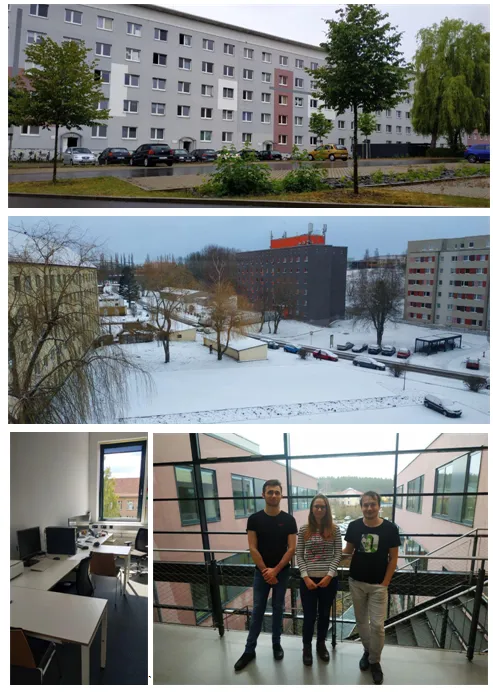
The student of the Department of Software of the Zaporizhzhia Polytechnic National University V. Khokhlova completed an internship under the Erasmus+ academic mobility program for students from February 1 to July 31, 2020 at the Ilmenau University of Technology in Germany.
The student’s impressions of the internship are as follows.
I started preparing for the internship in Ukraine a year and a half before the start of the internship. At the Zaporizhzhia Polytechnic National University, meetings are regularly held where students are told about all possible internships for bachelors and masters in European countries. This information is also published in the news channel of my Department of Software. I attended such events several times and was interested from the first time. But at that time, the university did not have a suitable internship for me as a bachelor. Therefore, I decided to take part in the internship for masters later.
When the recruitment for internships for masters was opened, I applied and received an action plan. I went through several interviews in English at my university, and then was invited to an interview with a professor from the partner university, where I talked about my skills, knowledge, abilities and motivation to take part in the internship. A few months later, I received an invitation for an internship at TU Ilmenau and started preparing all the documents. Both universities helped me with collecting all the documents. I applied for a visa for six months for the internship. Also, the European university helped me conclude a contract with a dormitory in advance, as well as study and scholarship agreements. I received all the necessary information about the internship preparation process, funding, and housing.
Upon arrival, I was immediately settled into a dormitory, given a plan for registration in the city and at the university, a campus plan, told where the shops and supermarkets, and the cafeteria were located. Although the registration processes in Germany are different from those in Ukraine, I received comprehensive information and went through them on my own without any problems.
At the beginning of my first working week, I discussed the internship tasks with the professor and started working. I was allocated a computer and a desk in the office – my workplace, provided with all the necessary software. Every week I reported on the work done.
My first task was to analyze a database with images of computer circuit board chips. I needed to analyze all the images with software and bring them to the same appearance. The image data is a training dataset for neural networks.
My second task was to create neural networks and train them to classify the images that were processed in the first task. The images could show either good chips or chips with defects.
The idea was to create software that would analyze boards in production and notify operators about defective chips or suspicious chips that require additional inspection by the operator. This software would help reduce the number of boards with defective chips that go on sale. My third task was to create documentation for the software described above. I worked on it for several months.
My last task was to analyze a number of scientific papers related to automatic optical recognition and develop a taxonomy for them.
In addition, I took German courses. The classes were held online and there was an exam at the end of the course. These classes were very useful and informative. They helped me adapt to a foreign country and understand the locals better. I really liked the German language and will continue to study it.
Since my working day lasted 8 hours, I only had free time on weekends. I devoted my weekends to my hobby – knitting. During the coronavirus, it was difficult to find yarn, but I explored almost all the shops in the city. In my free time, I also talked to my friends and family. I also planned to travel around Germany and see other cities. But, unfortunately, it was dangerous because of the coronavirus. Therefore, I definitely plan to return and see Germany from all sides.
But it turned out to be a test for me to work 40 hours a week. This is quite a big load, so you need to be ready to work hard and cope with fatigue. Also, students who go on an internship need to understand that there will be no family and friends nearby.
I am very pleased that I took part in the Erasmus+ student mobility program for internships. I improved my English skills, since my work was based on it, and started learning German, a new language for me. I met people from different countries, adapted to a foreign country. Thanks to the internship, I realized what I want to do in life and tried myself in different areas of scientific activity. I got acquainted with a different education system and approach to student education. I believe that this is a very valuable experience and I advise everyone who has such an opportunity to participate in student mobility programs.